Thursday, July 18, 2013

China shares weigh on Hong Kong Property

引用: http://uk.reuters.com

HONG KONG, July 18 (Reuters) - China shares underperformed Asia in mid-morning trade on Thursday, weighing on Hong Kong markets, with the financial and Hong Kong Property sectors hit by concerns over the availability of financing for real estate developers.

The pace of China's monthly home price increase slowed for a third straight month in June though the year-on-year gain was the strongest this year, underlining the challenges facing Beijing's near four-year-old campaign to tame housing inflation.

By 0313 GMT, the CSI300 of the leading Shanghai and Shenzhen A-share listings was down 0.9 percent, while the Shanghai Composite Index slid 0.6 percent. Both broke below chart support that held for a week, pointing to more losses in the near term.

The Hang Seng Index slipped 0.1 percent, with the China Enterprises Index of the top Chinese listings in Hong Kong also flat. Bourse turnover in Hong Kong stayed weak.

"It's not just Hong Kong Property  specific anymore," said Lee Wee Liat, BNP Paribas head of Asia Hong Kong Property  "Fears are growing that the liquidity shock a few weeks ago may be starting to trickle into the sector."

The official China Securities Journal reported on Thursday that financing requirements for listed Hong Kong Property evelopers will be gradually liberalised and loosened, subject to conditions. This follows a similar Xinhua news report on Wednesday.

BNP's Lee added that mainland media reports alleging inappropriate corporate behavior by state-owned conglomerates have raised concerns how that may potentially affect state-owned real estate developers.

Shares of China Vanke, the country's largest real estate developer by sales, declined 1.6 percent in Shenzhen. In Hong Kong, China Overseas Land and China Resources Land each fell nearly 2 percent.

Mid-sized lenders China Minsheng Bank and China Merchants Bank skidded 2.9 and 1.8 percent, respectively in Shanghai. Their Hong Kong-listed shares also suffered losses on the day.

Cement producers China Shanshui and BBMG Corp tanked after they warned of declining profits late on Wednesday, pointing to a likely divergence at their upcoming interim earnings reports due in August. Three other cement producers had issued positive profit alerts last week.

On Thursday, Shanshui slumped nearly 10 percent, nearing its June 25 low, which was also its lowest since April 2009. BBMG lost 1.9 percent, while sector giant Anhui Conch Cement slid 2.1 percent in Hong Kong.

But there were gains for China Resources Power, rising 2.3 percent after the company said on its website that it considers recent media reports alleging corruption in the company to be defamatory and that it had adversely affected the reputation of its leadership.

Click Property Agency Limited : Hong Kong Property | Hong Kong Office | Hong Kong Real Estate Agency

Monday, July 15, 2013

Hong Kong Property agents hit as policies to cool property prices dent deal volume

引用:http://www.scmp.com/

Hong Kong real estate agents are united. On Sunday morning, agents from big and small firms will march to government headquarters at Tamar in Admiralty to protest against measures designed to cool the Hong Kong  property market which, they say, have affected their livelihoods.

The protest is supported by industry leaders Centaline Hong Kong  property gency and Midland Realty as well as associations representing smaller agencies. The industry is calling on the government to scrap the measures.

"The entire industry, both big and small agents, is suffering," said Centaline founder Shih Wing-ching.

Shih blames a decline in transaction volumes on measures introduced by Chief Executive Leung Chun-ying after he took office a year ago. The policies aim to curb soaring residential and non-residential Hong Kong  propertyprices.

Centaline Hong Kong  property gency said its agents recorded 11 secondary market transactions in the top 10 estates over the June 29-July 1 long weekend, down 31 per cent from the previous two-day weekend.

About 200 primary units have been sold in the seven new projects put on sale since the new Residential Properties (First-hand Sales) Ordinance came into effect just over two months ago.

"No one buys. No one rents. The market is dead," said Lai Chau-lin, in her early 60s, who works for a small Hong Kong  propertyagency, Pak Shing Real Estate.

"I earned HK$1,100 in commission in February. That was my entire salary for the month and the lowest monthly income I've earned in the past 10 years."

Lai brokered one or two deals a month from March to June, for leases on sub-divided and regular units, earning between HK$3,000 and HK$5,000 a month after sharing the commissions with her boss.

"When the market was good, we had no time to go out for lunch because clients kept calling to look for flats," she said. "Today, I do not dare to go out for lunch because I have no money."

Sales of second-hand homes rose 23.9 per cent month on month to 3,314 units in June, compared with 2,674 in May, according to Centaline. The figures reflect the market conditions in May because of a time lag of about four weeks between buying a Hong Kong  property and registering the sale. In April, there were 2,171 deals for second-hand homes.


'The number once hit as high as 9,000 in March last year," said Lai.

The implementation of the ordinance on April 29 affected the market.

New rules required greater transparency in Hong Kong  property sales procedures, with developers having to publish sales brochures seven days before the official sale period and price lists three days before the launch, to give potential buyers time to study the details of offerings.

Agents said developers needed time to get used to the new rules. They said they expected sales to continue to be slow in the coming months. Sales of offices, shops and industrial properties have also declined.

Total Hong Kong  property  transactions, including residences, offices, shops and car parks, fell 12.7 per cent month on month in June to 4,616, according to Land Registry figures. The year-on-year decline was 45 per cent.

There were 8,302 transactions in January, 9,643 in February and 6,841 in March.

The fall in sales follows Leung's pledge to make flats more affordable for Hong Kong residents.

Hong Kong's housing prices have surged 120 per cent from 2008 and 34 per cent from their peak in 1997, Financial Secretary John Tsang Chun-wah said on February 22, when he announced the latest round of Hong Kong  property cooling measures.

Hong Kong is one of the least affordable Hong Kong  property markets in the world, with an average home costing the equivalent of 12.6 times an average annual income, according to an International Monetary Fund report in January.

On February 22, Leung's administration made good on its pledge and Tsang announced the doubling of stamp duty on residential and non-residential transactions worth more than HK$2 million. The stamp duty did not apply to those buying homes for the first time.

In a package of measures announced the same month, the Hong Kong Monetary Authority, the city's de facto central bank, announced its sixth round of measures to rein in housing prices since 2009, requiring banks to test borrowers' ability to repay mortgages on the assumption that interest rates would rise by 3 percentage points, instead of 2 percentage points previously.

It also lowered the maximum allowable loan-to-value ratio for non-residential Hong Kong  property to 40 per cent from 50 per cent for locals. It also capped mortgages for car parks at 40 per cent of their value, down from 50 per cent, and reduced their repayment terms to 15 years from 20 years.

The steps were the first taken by the HKMA that dealt with non-residential loans. In October, a 15 per cent levy on non-local and corporate Hong Kong  property buyers, known as buyer's stamp duty, was introduced.

That same month, the government raised a special stamp duty on sellers, introduced in 2010 to curb speculation, by 5 percentage points, and extended its effect on resales from two to three years. The rates now range from 10 to 20 per cent.

Major domestic agencies and international Hong Kong  property consultants are diversifying their businesses.

Hong Kong  property consultant Savills, which until now had focused on brokering big-ticket Hong Kong  property transactions and introducing overseas properties to Hong Kong buyers, is now expanding its sales force as it moves to enter the mass housing market.

"Small players will be forced out of the market," said Raymond Lee, chief executive of Savills, Greater China. "There are 40,000 real estate agents. One third will be forced out of the market."

Not all industry players agree the measures should be axed.

"The cooling measures are not targeted at agents, but the red-hot Hong Kong  property market," said Ringo Lam Chun-chiu, valuation director at AG Wilkinson & Associates. "In the face of rising Hong Kong  property prices, it is good to see the government impose measures to cool the market."

Professor Chau Kwong-wing, from the department of real estate and construction at the University of Hong Kong, said the decline in transaction volumes had affected the market.

"Hong Kong  property agents are being hit hardest, followed by related industries such as solicitors, surveyors and those who refurbish flats," he said. "Some will be forced out."

Chau said the weakening of these sectors would not result in a slowdown in Hong Kong's economy.

"Instead, Hong Kong's economy will be hit by external factors such as the global economy and the mainland's economic growth."

Click Property Agency Limited : Hong Kong Property | Hong Kong Office | Hong Kong Real Estate Agency

Friday, July 12, 2013

Hong Kong developers' tepid bids for site reveal gloomy outlook for prices

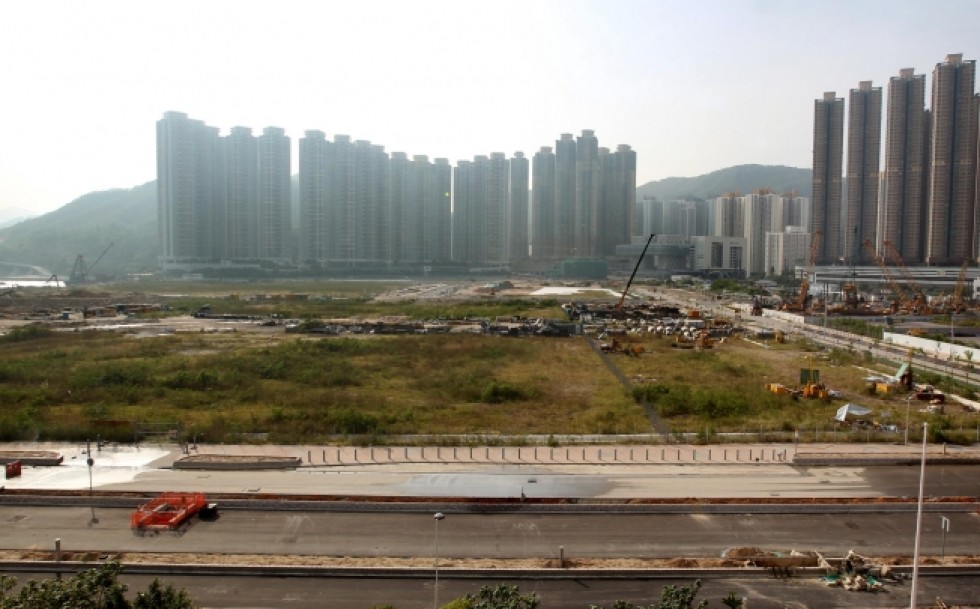
The lacklustre bidding for a Tseung Kwan O residential site on Tuesday shows that developers believe Hong Kong property prices will come under pressure over the next few years, analysts say.

Chinachem's winning tender of HK$3 billion translates into an accommodation value of HK$3,653 per square foot, the lowest in the area in more than three years.

About 4,000 flats in Tseung Kwan O are available for sale, Centaline Hong Kong propertyAgency said.

Ken Lee Yuk-cheung, a sales director at the firm, said about 100 flat owners cut their asking price by 1 to 2 per cent after the tender result was released and that around 20 cut their asking price by more than 2 per cent.


"But the news was not so daunting as to make a majority of flat owners cut their asking prices," he said.

Eric Yuen Chi-fung, the head of research at Guoco Capital, said the bidding reflected developers' expectations for Hong Kong property rices three to four years down the road. "They believe Hong Kong property rices have downward potential, and so that's why their offers were conservative," Yuen said.

"Chinachem is a private company and is under no pressure to publicly report its profit. Its offer was the highest of the developers. The others must hold a more negative outlook."

Yuen said he believed developers were pessimistic because interest rates may rise as the US Federal Reserve moves closer to reducing its stimulus programme.

"Development costs will increase if interest rates rise," he said. "As construction costs continue to rise and housing supply increases significantly, developers have turned conservative when acquiring land."

Yuen said he expected Hong Kong property rices to drop, adding that how far they fall depended on the performance of financial markets. "It seems the government hopes Hong Kong propertyprices will fall 20 per cent," he added.

Charles Chan Chiu-kwok, the managing director of consultancy Savills, said he expected prices to drop 10 per cent to 15 per cent in the second half.

"Hong Kong property prices face downward pressure, as Hong Kong property  ales have stayed at a low level," he said. "Flat owners will have to cut their asking prices to lure buyers, and prices of new homes will be affected by an increase in supply."

Lee Wee Liat, the head of Hong Kong property  esearch at BNP Paribas Securities, said mass residential prices would be flat or rise by as much as 5 per cent.

"Developers submitted conservative offers for the Tseung Kwan O site because there will be plenty of new supply in the area," Lee said. "Demand for mass residential remains strong, and rental yields are still higher than mortgage rates, but the outlook for high-end residential flats is not positive."

Click Property Agency Limited : Hong Kong Property | Hong Kong Office | Hong Kong Real Estate Agency

Friday, June 28, 2013

Hong Kong, China anxious on rising property interest rates

引用: http://www.globalpropertyguide.com

Hong Kong Property is yet to give up on its property cooling measure, but interest rates may increase in anticipation of the U.S. Federal Bureau’s next move, Finance Secretary John Tsang Chun-wah said.

The Federal Reserve’s hint of easing the quantitative easing by year-end might see the sudden exit of hot money from Hong Kong Property and other Asian markets, Mr. Tsang explains at the sidelines of an event hosted by the Hong Kong Property Association of Banks.

An increase in rates is seen affecting the property sector, Mr. Tsang adds, though this might only happen when the U.S. starts raising interest rates, which nowadays remained close to zero.

Mr. Tsang notes that it is still hard to predict how the eventual increase in rates will erode the island-city’s property prices, but has assured that there is adequate liquidity based on the cost of holding a property and the low mortgage lending rate are in place.

He, however, pointed out that asset bubbles are still imminent and the government is prepared to take action if needed.

The 14-day interbank rate in the mainland rose on record last week at 8.56% due to mounting liquidity concerns.

Mr. Tsang explains that the 14-day interbank rate is crucial for a bank in order to meet the end-of-quarter book balancing. The end of quarter reporting is due by end of this week.

The mainland banks’ interest rates could be a cause of worry for Hong Kong Property banks, he tells South China Morning Post.

Nonetheless, Standard Chartered Bank’s CEO, Benjamin Hung Pi-cheng, predicts Hong Kong Property interest rates will remain flat for the entire year adding that the island-city’s rates are pegged to the US rates.

Click Property Agency Limited : Hong Kong Property | Hong Kong Office | Hong Kong Real Estate Agency

Monday, June 24, 2013

Sydney’s Skye by Crown lures Hong Kong and Singapore buyers

Sydney’s Skye by Crown lures Hong Kong and Singapore buyers

引用: http://www.property-report.com
Leading Australian Hong Kong Property firm Crown Group’s latest Sydney development attracted more than US$20 million in apartment sales in Hong Kong and Singapore during the launch earlier this month.

“It is encouraging to see such a strong response to Crown Group’s apartments from buyers in Singapore and Hong Kong,” said Crown Group CEO Iwan Sunito. ”They want to buy in areas that are strengthening, areas that are underpinned by employment, transport, shopping and education, with genuine faith in the product they’re buying into.”

Crown Group launched Skye by Crown over two days at the Mandarin Oriental in Hong Kong and Regent Hotel in Singapore, in addition to a local event held in  Sydney. The sales from all three launches totaled more than US$100 million.

Buyers in Hong Kong and Singapore were given exclusive access to a selection of the apartments.

Upon completion, the complex will comprise 232 apartments, set over 20-storeys. The building will feature a restaurant and retail precinct at ground level, as well as an infinity edge pool.

Designed by Japanese Australian architect Koichi Takada, the designs include glass facades, with balconies, and wintergreens, and a sculpturally inspired bronze coloured metal veil.

Click Property Agency Limited : Hong Kong Property | Hong Kong Office | Hong Kong Real Estate Agency

Wednesday, June 19, 2013

Hong Kong Chief Executive Pledges Property Curbs to Stay

引用: http://www.bloomberg.com

Hong Kong, the world’s most expensive home market, will not ease its real-estate curbs until there’s a steady supply of new properties as the government seeks to address concerns that it favors developers.
Earlier actions have brought down prices and rents, and the government can do more if needed, Chief Executive Leung Chun-ying, 58, said in an interview in New York. An index of Hong Kong property stocks fell to the lowest in nine months.


“There’s a voice out there in the Hong Kong community that the government should ease off,” the former Hong Kong property surveyor said yesterday. “This is not the time to relent.”

Hong Kong property transactions in Hong Kong have tapered off, hurting developers, since Leung introduced his toughest measures yet in February by doubling a sales tax and extending curbs to commercial real estate. As Leung completes his first year in office in July, he’s seeking to focus on the economy to bolster his popularity, which is near a record low.

“Leung has been trying to strengthen his performance in social and public policies to win him more public support,” said Dixon Sing, an associate professor of social science at the Hong Kong University of Science & Technology. “Failing to get Hong Kong property  rices under control will risk hurting Hong Kong’s competitiveness and Leung’s popularity.”

Home prices in the former British colony have more than doubled to a record since the start of 2009, spurring protests as developers booked rising profits. Leung came into office last July pledging to narrow a record wealth gap, address housing affordability and clean up the environment.


Transactions Drop
The Hang Seng Hong Kong property  ndex (HSP), which tracks nine of the biggest developers listed in the city, fell as much as 3.6 percent today to the lowest since September. It closed 0.5 percent lower, extending this year’s decline to 11 percent, compared with the 7.8 percent decline in the benchmark Hang Seng Index.

Leung in February doubled stamp duty taxes on all Hong Kong property  ransactions over HK$2 million, after imposing an extra tax on home purchases by companies and non-residents in October. Since 2010, the government has charged an extra tax of up to 20 percent of the value of homes on buyers who resell them within three years and raised the minimum down-payment on mortgages for homes costing more than HK$7 million.
Home transactions fell for a third consecutive month in May. They dropped to 3,286 in December, the lowest since November 2008. Prices have dropped 3 percent since a record high in March, according to an index compiled by Centaline Hong Kong property Agency Ltd.


Mainland Chinese
“We’re delivering results,” Leung said when asked about his performance. “We have made a very clear stance on the question of Hong Kong property  rices. For the first time in a very long time, the allegations that there is somehow collusion between Hong Kong and the developer industry have gone away.”

Leung’s support rating was 46.7 on a scale of 0 to 100, according to survey of 1,012 people conducted June 3-5 by the University of Hong Kong’s Public Opinion Program, down from 53.8 when he took office. He has been hurt by illegal building additions to his home and student protests against a plan to introduce national education classes that are seen as overly favorable to China’s Communist government.

The Hong Kong economy will continue to be bolstered by rising numbers of Chinese tourists, Leung said. The city had 48.6 million arrivals last year, of which more than 34.9 million were from China, according to the government. Total arrivals may gain 15 percent this year, Leung said.

Mainland Chinese accounted for 15 percent of all residential Hong Kong property  ales in Hong Kong in the first quarter, down from 31 percent over the previous three months, according to Centaline. The figure reached a record 51 percent in the third quarter of 2011.


Milk Powder
Leung said he’s aware of the rising tension Chinese visitors have brought to Hong Kong, as they swamp shops and buy up daily necessities and homes. The government will continue to ensure that residents come first, he said.

The chief executive has banned Chinese mothers from giving birth in Hong Kong, restricted purchases of milk powder by visitors and sold some land to be developed for resident-only housing.

Asked about the city’s 30-year-old currency peg to the U.S. dollar, Leung said it has served Hong Kong well and there’s no discussion of replacing it.

To expand the economy in the longer term, Leung said he wants to add to the services the city provides, cementing its place as China’s finance center. Hong Kong should look into shipping finance and insurance, for example, diversifying away from managing initial public listings and commercial banking, he said.

“We want to grow, we want to diversify,” Leung said. “We want to move up the food chain. China is fast becoming a major maritime and shipbuilding nation in the world. Is there a reason why we shouldn’t diversify?”

Click Property Agency Limited : Hong Kong Property | Hong Kong Office | Hong Kong Real Estate Agency

Tuesday, June 11, 2013

Foreign chambers of commerce hit out at doubling of Hong Kong stamp duty

引用: http://www.scmp.com

Chambers of commerce that represent hundreds of foreign firms in Hong Kong are voicing unhappiness at the recent doubling of stamp duty on commercial Hong Kong Property purchases.

The government's February 22 tax increase on Hong Kong Property  sales exceeding HK$2 million was designed to rein in speculation. But foreign firms say they have been unfairly targeted by the move, which greatly raises their business costs in the city.

The top bracket - on sales of more than HK$20 million - rose to 8.5 per cent of Hong Kong Property value, from 4.25 per cent.

Because of the increase, Canadian insurer Manulife Financial had to pay HK$383 million instead of HK$191 million when it spent HK$4.5 billion to purchase the planned West Tower at One Bay East in Kwun Tong last month for its own use.


The Canadian Chamber of Commerce has written to the Legislative Council, urging the government to grant an exemption to long-term buyers of office space for their own use.

"[Chamber members] are purchasing the office space to try to fix their costs in an expensive city," said David Nesbitt, the chamber's executive director. "But they are unfairly punished. We have written a letter laying out our disagreement with long-term and normal purchasers [of commercial properties] being punished by the taxation, which isn't aimed at them."

Nesbitt said the chamber represented 180 companies operating in Hong Kong, from large organisations like Manulife to firms with a handful of employees.

"Some of our members are considering purchasing [commercial] Hong Kong Property or have already done so," he said.

The Australian Chamber of Commerce said it would also be expressing its concerns that the raised duty would discourage genuine users from buying commercial properties.

The American Chamber of Commerce is drafting its views on the issue, people familiar with the matter said. The British Chamber of Commerce is also said to be concerned.

The Canadian chamber's letter was sent to the Legislative Council's Bills Committee on Stamp Duty (Amendment) Bill 2013 last week, urging the government to consider the "unintended consequences" of the doubling of stamp duty for all buyers.

The chamber suggested the government consider the example of Singapore, which included an exemption from extra duty for non-residential properties held for more than three years.

A spokeswoman for the Australian chamber said its construction and finance committees would be responding with suggestions for exemptions.

"The negative flow-on effects include limited diversification of ownership as well as fewer choices for commercial tenants," she said.

The Australian chamber is the second-largest in Hong Kong, with almost 1,400 members representing about 500 companies.

A spokesman for the American chamber, the largest chamber, refused to comment. A member of the British chamber's real estate panel did not return calls. A member of the Legco's Bills Committee said a meeting would be held today to discuss the issue.

Click Property Agency Limited : Hong Kong Property | Hong Kong Office | Hong Kong Real Estate Agency